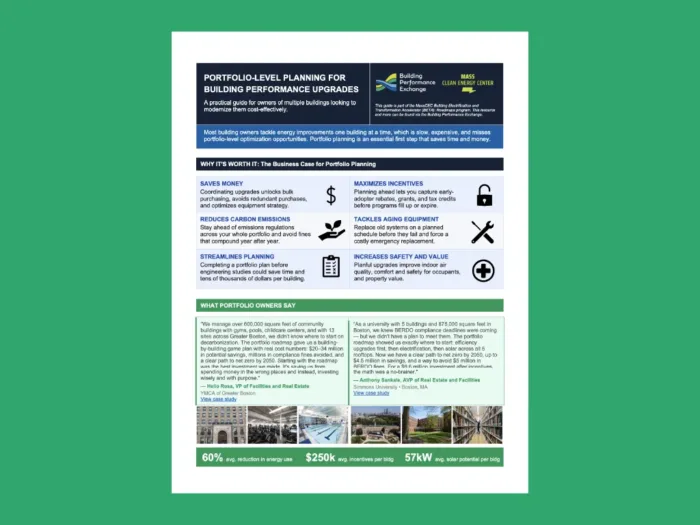
Portfolio-level plans provide owners of multiple buildings (2+) with a coordinated roadmap for energy improvements across their portfolio.
Why it’s Worth It: The Business Case for Portfolio Planning
Saves Money
Coordinating upgrades unlocks bulk purchasing, avoids redundant purchases, and optimizes equipment strategy.

Reduces Carbon
Stay ahead of emissions regulations across your whole portfolio and avoid fines that compound year after year.

Streamlines Planning
Completing a portfolio plan before engineering studies could save time and tens of thousands of dollars per building.

Maximizes Incentives
Planning ahead lets you capture earlyadopter rebates, grants, and tax credits before programs fill up or expire.

Tackles Aging Equipment
Replace old systems on a planned schedule before they fail and force a costly emergency replacement.

Increases Safety and Value
Planful upgrades improve indoor air quality, comfort and safety for occupants, and property value.

What Portfolio Owners Say
Most building owners tackle energy improvements one building at a time, which is slow, expensive, and misses portfolio-level optimization opportunities. Portfolio planning is an essential first step that saves time and money.
“Starting with the roadmap was the best investment we made. It’s saving us from spending money in the wrong places and instead, investing wisely and with purpose.”
YMCA of Greater Boston
YMCA of Greater Boston

“We manage over 600,000 square feet of community buildings with gyms, pools, childcare centers, and with 13 sites across Greater Boston, we didn’t know where to start on decarbonization.
The portfolio roadmap gave us a building-by-building game plan with real cost numbers: $20–34 million in potential savings, millions in compliance fines avoided, and a clear path to net zero by 2050.
Starting with the roadmap was the best investment we made. It’s saving us from spending money in the wrong places and instead, investing wisely and with purpose.”
– Helio Rosa, VP of Facilities and Real Estate
Simmons University
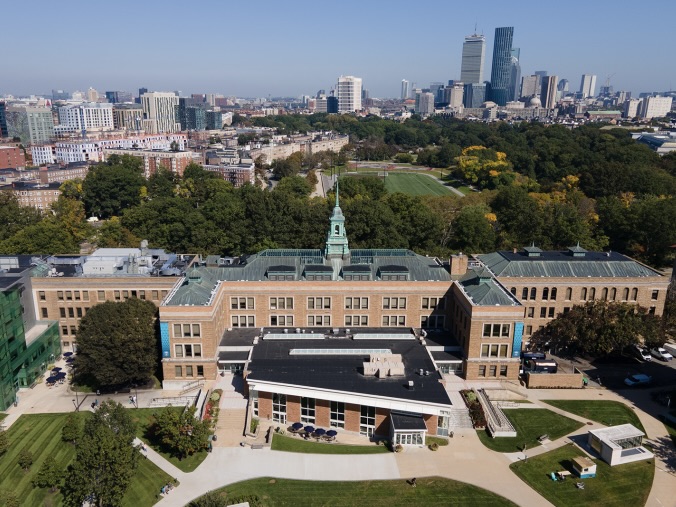
“As a university with 5 buildings and 875,000 square feet in Boston, we knew BERDO compliance deadlines were coming — but we didn’t have a plan to meet them.
The portfolio roadmap showed us exactly where to start: efficiency upgrades first, then electrification, then solar across all 5 rooftops.
Now we have a clear path to net zero by 2050, up to $4.5 million in savings, and a way to avoid $5 million in BERDO fines. For a $9.6 million investment after incentives, the math was a no-brainer.”
– Anthony Sankale, AVP of Real Estate and Facilities
Portfolio Roadmap: Codman Square Neighborhood Development Corporation
Case StudiesWhy this is important: High-level summary of how a portfolio of 19 affordable housing buildings plan to reach net-zero emissions by 2050.
Portfolio Roadmap: Excel Academy Charter Schools
Case StudiesWhy this is important: High-level summary of how 3 charter schools plan to reach net-zero emissions by 2050.
Portfolio Roadmap: WGBH Educational Foundation
Case StudiesWhy this is important: High-level summary of how 2 broadcasting buildings plan to reach net-zero emissions by 2050.
Portfolio Roadmap Averages:
- 60% avg. reduction in energy use
- $250k avg. incentives per bldg
57kW avg. solar potential per bldg
What you can expect from Portfolio Planning:
- The plan is a useful document to get buy-in from leadership early-on, and as a resource to mitigate delays due to staff turnover.
- The plan charts a course forward, pinpointing which buildings need detailed engineering studies and which don’t. Some buildings require a deeper assessment before moving forward.
- Data is the hard part. Gathering utility bills and equipment info takes time, but it makes every future decision faster and measurable.
- Technology and incentives evolve; revisit your roadmap every 3 to 5 years to keep it current.
What’s included in a Portfolio Decarbonization Roadmap?
A portfolio roadmap is a low-cost, high-value planning tool that gives you a clear picture of every building’s energy and cost-savings potential, as well as a practical plan for getting there.
1
Desktop Assessment
Cost-effective approach that identifies the potential for energy savings, electric upgrades, and solar at every building.
2
Building-by-Building Priorities
Recommends exactly which projects to do at each building and when, based on equipment age, cost-effectiveness, and your goals.
3
Costs & Available Incentives
Evaluates the full project costs alongside available rebates, grants, tax credits, and financing — so you know the real net cost.
4
Compliance Clarity
Maps your portfolio against building performance standards, plots a path to compliance, and shows how to avoid costly penalties.
5
Implementation Strategies
Practical guidance to help you execute the plan, including financing options, project phasing, and procurement tips to reduce costs.
How to Get Ready
Gathering the right information upfront makes your roadmap faster to complete and more accurate. Here’s what to pull together before you start.
Building Info
Dig out those building records:
- Gross square footage by building
- Building type and primary use
- Year built and roof ages
- Dates of replacements / renovations
Energy Bills
Reach out to your utility:
- 24 months of electric bills
- 24 months of gas, oil, or steam bills
- Any prior energy audit reports
Equipment Info
Check your facility database:
- Type & age of HVAC systems
- Fuel type for heat & hot water
- Existing facility and maintenance records
Ready to Map Your Portfolio’s Path to Net Zero?
Contact a portfolio planning professional and check out more resources in the library.
Post a Comment