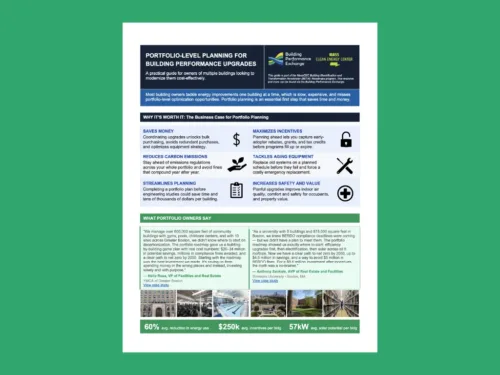
Portfolio-level Planning for Building Performance Upgrades
Guides & How TosWhy this is important: Portfolio-level plans provide owners of multiple buildings (2+) with a coordinated roadmap for energy improvements across their portfolio.
A library of building performance resources sourced from experts and partners from across Massachusetts and beyond. Discover relevant tools, case studies, on-demand training, and more all curated in one spot.
Why this is important: Portfolio-level plans provide owners of multiple buildings (2+) with a coordinated roadmap for energy improvements across their portfolio.
Why this is important: High-level summary of how 3 charter schools plan to reach net-zero emissions by 2050.
Why this is important: High-level summary of 12 gyms plan to reach net-zero emissions by 2050.
Why this is important: High-level summary of how 2 broadcasting buildings plan to reach net-zero emissions by 2050.
Why this is important: High-level summary of how 5 higher education buildings plan to reach net-zero emissions by 2050.
Why this is important: High-level summary of how a portfolio of 19 affordable housing buildings plan to reach net-zero emissions by 2050.
Why this is important: High-level summary of how a portfolio of 13 lodging / hospitality buildings plan to reach net-zero emissions by 2050.
Why this is important: Federal, local, and state funding and technical assistance opportunities related to building electrification.
Why this is important: Outlines the critical role operations and maintenance play in increasing energy efficiency and adding value for property owners and their portfolios.

Why this is important: Mass Save services designed to uncover energy-saving opportunities and guide you on your path to lower costs and emissions.

Why this is important: Offers an accessible introductory understanding of smart pumps, which includes a video, benefits list, additional resources, FAQs, and case studies.


Why this is important: Resources for contractors designed to support decision‑making and align with project requirements, performance, and customer goals.

Why this is important: Supports owners and operators to demonstrate the value proposition of net zero energy in leased buildings

Why this is important: Decarbonization Planning Assessments guide building owners on what systems to upgrade, when to do it, and how to reach performance goals in their building.

Why this is important: Models how a large multifamily building that uses district steam to produce hot water for heating can reduce emissions and improve energy efficiency.
Why this is important: Models how a large multifamily building constructed pre-1971 that uses a two-pipe steam system for heating can reduce emissions and improve energy efficiency.
Why this is important: Models how a mixed-use multifamily building with ground floor commercial space can reduce emissions and improve energy efficiency.