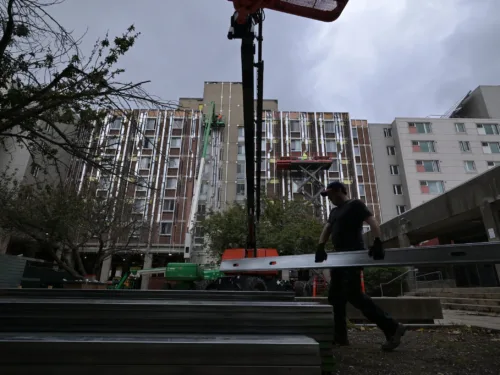
White Paper: Wellesley Village Church’s Geothermal Transition
ReportsWhy this is important: Learn how a historical church upgraded their heating and cooling systems to ground-source heat pumps, leveraging incentives to cover part of the cost.

A library of building performance resources sourced from experts and partners from across Massachusetts and beyond. Discover relevant tools, case studies, on-demand training, and more all curated in one spot.
Why this is important: Learn how a historical church upgraded their heating and cooling systems to ground-source heat pumps, leveraging incentives to cover part of the cost.
Why this is important: This webinar covers how two institutions, Wellesley Village Church and Allston Brighton CDC, balanced, sequenced, and financed decarbonization measures.

Why this is important: This webinar covers navigating building performance standards, various pathways to decarbonization, and a general overview of how to pay for building upgrades.

Why this is important: Find qualified energy professionals with credentials to undertake third party verification of Boston BERDO data. Information is self-reported and not endorsed by the City of Boston
Why this is important: Identify building science firms who are offering products and services in the Boston area. Information is self-reported and not endorsed by the City of Boston.
Why this is important: Find qualified renewable energy providers in the Boston area. Information is self-reported and not endorsed by the City of Boston.
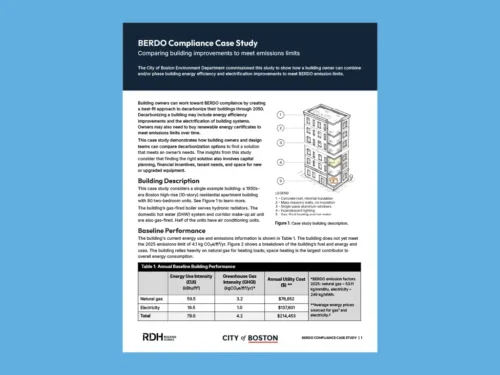
Why this is important: This case study examines seven scenarios for Boston BERDO compliance in the context of an aging/end-of-life building enclosure and mid-life mechanical systems.
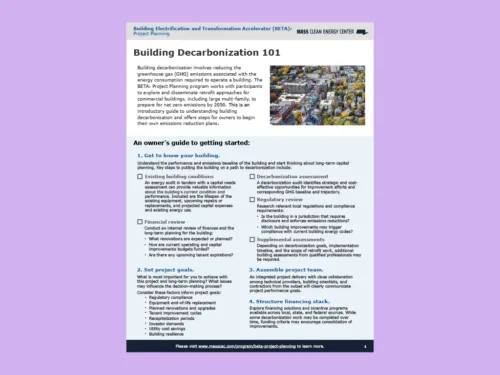
Why this is important: Introductory guide to understanding building decarbonization and steps for owners to begin their own emissions reduction plans.
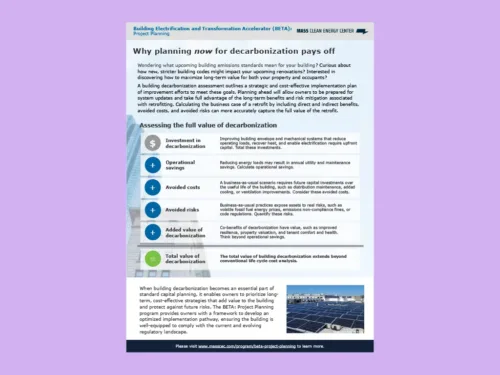
Why this is important: Planning ahead for building upgrades allows owners to prepare for system updates and take full advantage of the long-term benefits and risk mitigation associated with retrofitting.
Why this is important: Provides a standard framework for buildings pursuing decarbonization to document a long-term plan, including building profile, equipment life cycles, and business-as-usual costs.
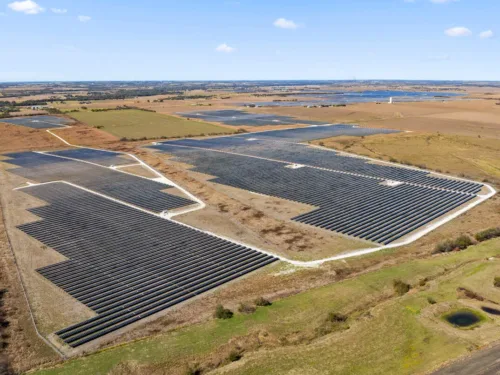
Why this is important: Purchase Power Agreements enable building owners to collaborate on renewable energy projects and offset their on-site emissions.
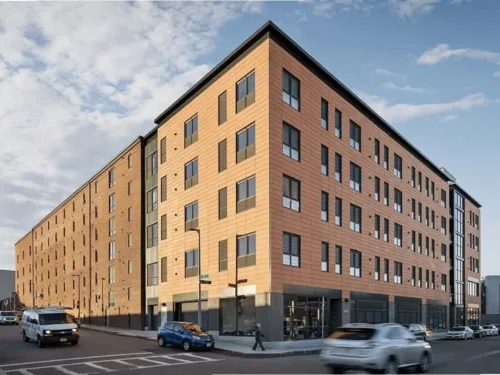
Why this is important: Example of a mixed-use residential and artist studios building in Boston that implemented upgrades to save energy on heating and cooling, improve comfort and durability.
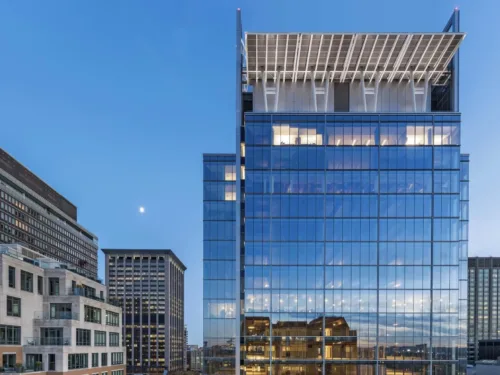
Why this is important: Retrocommissioning is the process of optimizing a building's HVAC, electrical, and other systems to save energy. Learn from this example of BXP's office buildings across Boston.
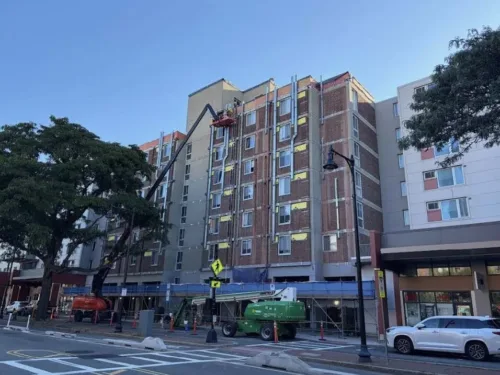
Why this is important: Example of a large affordable housing building deep energy retrofit that fostered collaboration between the building owner and tenants organization.
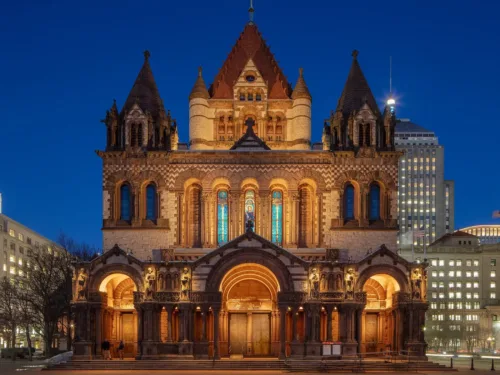
Why this is important: Learn how a historical church in Boston upgraded their systems, added geothermal heating and cooling, and preserved architectural integrity.
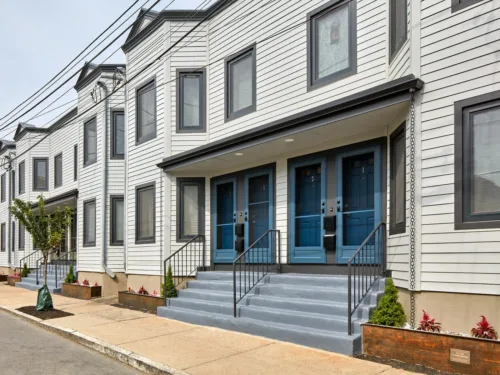
Why this is important: Learn from an affordable housing deep energy retrofit that leveraged local, state, and federal funds.

Why this is important: This 2-page case study covers the project's funding sources, pre-existing conditions, retrofit strategy, tenant engagement, and lessons learned.
Why this is important: This 2-page case study covers the project's funding sources, pre-existing conditions, retrofit strategy, tenant engagement, and lessons learned.